


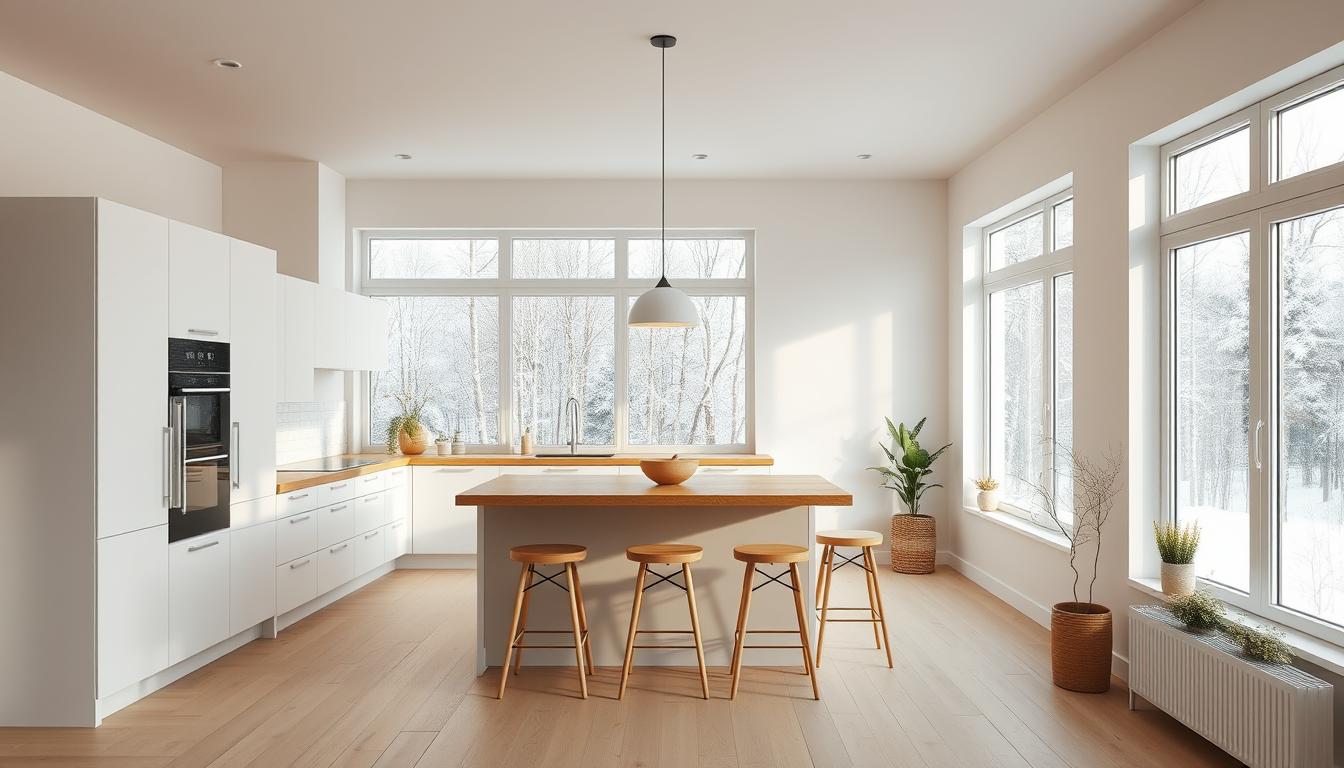
Imagine stepping into a warm and inviting cooking space that seamlessly blends minimalism with functionality. This is the essence of Scandinavian kitchen design, a style that has captured the hearts of homeowners worldwide.
The Nordic kitchen approach focuses on simplicity, practicality, and a deep connection to natural materials. By embracing these Scandinavian design principles, you can transform your kitchen into a haven that is both beautiful and functional. As we explore the world of Scandinavian kitchen design, we’ll delve into the key elements that make this style so appealing. From the use of natural materials to the emphasis on functionality, we’ll discover how to create a kitchen that is both a joy to cook in and a pleasure to behold.
The Philosophy Behind Scandinavian Kitchen Design
At the heart of Scandinavian design lies a profound philosophy that combines aesthetics with practicality. This design ethos is not just about creating beautiful spaces but also about ensuring they are functional and comfortable.
Minimalism and Functionality Scandinavian Kitchen Design
Scandinavian design is characterized by its emphasis on minimalism and functionality. A minimalist kitchen, for instance, focuses on clean lines, simplicity, and the elimination of unnecessary elements. This approach not only creates a visually appealing space but also enhances the functionality of the kitchen, making it more efficient and easier to navigate.
The Concept of “Hygge” in Kitchen Spaces
The Danish concept of “hygge” (coziness) is integral to Scandinavian design, particularly in kitchen spaces. Achieving hygge involves creating a warm and inviting atmosphere through the use of soft lighting, comfortable textures, and warm colors. In a kitchen, this can be accomplished by incorporating elements like wooden accents, soft lighting, and plush textiles, thereby making the space feel welcoming and cozy.
| Design Element | Minimalist Kitchen | Hygge Kitchen |
|---|---|---|
| Lighting | Bright and functional | Soft and warm |
| Color Scheme | Monochromatic or neutral | Warm and earthy tones |
| Textiles | Minimal | Plush and cozy |
The Evolution of Scandinavian Kitchen Design
From its historical roots to modern adaptations, Scandinavian kitchen design has evolved, reflecting changes in lifestyle and technology. This evolution is deeply rooted in the cultural and environmental factors of Nordic countries.
Historical Roots in Nordic Countries Scandinavian Kitchen Design
The traditional Scandinavian kitchen was influenced by the region’s harsh climate and the need for simplicity and functionality. Historically, Nordic kitchens were designed to be warm and inviting, often featuring wood as a primary material due to its availability and insulating properties.
The concept of “hygge” or coziness, also played a significant role in the design of these kitchens, focusing on creating a warm atmosphere despite the external cold climate.
Modern Adaptations in Contemporary Homes Scandinavian Kitchen Design
Today, Scandinavian kitchen design continues to evolve, incorporating modern Scandinavian design trends such as sustainability and smart technology. Modern kitchens now often feature energy-efficient appliances and materials that are both durable and environmentally friendly.
The integration of technology has also become a hallmark of contemporary Scandinavian kitchens, with smart home features that enhance functionality and convenience.
Key Elements of Scandinavian Kitchen Design
At the heart of Scandinavian kitchen design is a commitment to clean lines, minimal ornamentation, and a focus on functionality. This design philosophy creates kitchens that are not only aesthetically pleasing but also highly functional and efficient.
Clean Lines and Simple Forms Scandinavian Kitchen Design
One of the defining features of Scandinavian kitchen design is the use of clean lines and simple forms. This minimalist approach to design eliminates unnecessary clutter, creating a sense of calm and serenity in the kitchen. By focusing on simple shapes and minimal ornamentation, Scandinavian kitchens achieve a timeless elegance that is both beautiful and functional.
Clutter-Free Countertops and Spaces Scandinavian Kitchen Design
Clutter-free countertops and spaces are essential to maintaining the minimalist aesthetic of Scandinavian kitchen design. By keeping surfaces clear of clutter, the kitchen feels more spacious and easier to navigate. This approach also promotes a sense of calm and reduces stress, making the kitchen a more enjoyable space to spend time in.
Balance Between Form and Function Scandinavian Kitchen Design
A key principle of Scandinavian design is achieving a balance between form and function. In the kitchen, this means that every element, from the cabinetry to the lighting, serves a practical purpose while also contributing to the overall aesthetic. By striking this balance, Scandinavian kitchens are able to seamlessly blend beauty and practicality, creating a space that is both beautiful and highly functional.
The Signature Color Palette Scandinavian Kitchen Design
Scandinavian kitchens are characterized by a unique color scheme that prioritizes simplicity, functionality, and a connection to nature. This distinct approach to color not only enhances the aesthetic appeal of the kitchen but also contributes to the overall sense of warmth and welcoming ambiance.
White as the Foundation Scandinavian Kitchen Design
White is a foundational color in Scandinavian kitchen design, serving to create a sense of brightness and airiness. It reflects light, making the space feel larger and more inviting. White also provides a clean and neutral backdrop for incorporating other design elements.
Neutral Tones and Their Applications
Neutral tones, including various shades of gray, beige, and soft browns, play a crucial role in Scandinavian kitchen design. These colors are used to create a calm and serene atmosphere, allowing the natural beauty of materials like wood and stone to shine through.
Strategic Use of Accent Colors
While the foundation of Scandinavian kitchen design is rooted in neutrality, accent colors are used strategically to add personality and depth. Blues, greens, and yellows are common accent colors that can be introduced through accessories, textiles, or statement pieces, adding a touch of vibrancy to the space.
Natural Materials in Nordic Kitchens
The use of natural materials is a cornerstone of Scandinavian kitchen design, bringing warmth and authenticity to the space. Nordic kitchens often feature a combination of natural materials that not only add aesthetic appeal but also create a cozy and organic feel.
Wood Elements and Finishes
Wood is a predominant material in Nordic kitchens, used for cabinetry, flooring, and furniture. The choice of wood tone can significantly impact the kitchen’s ambiance.
Light vs. Dark Wood Tones
Light wood tones, such as birch and ash, can make a kitchen appear more spacious and airy. In contrast, dark wood tones, like oak and walnut, add depth and warmth. The choice between light and dark wood tones depends on the desired atmosphere and the kitchen’s size.
Sustainable Wood Options
Sustainability is a key consideration in Scandinavian design. Opting for sustainably sourced wood, such as FSC-certified timber, ensures that the environmental impact is minimized. Reclaimed wood is another eco-friendly option that adds character to the kitchen.
Stone, Ceramic, and Metal Accents
In addition to wood, other natural materials like stone, ceramic, and metal are used to add texture and visual interest. Stone countertops, such as granite or soapstone, are durable and aesthetically pleasing. Ceramic tiles can be used for backsplashes, bringing in color and pattern. Metal accents, often in stainless steel or copper, are used sparingly to add a touch of sophistication.
By incorporating these natural materials, Nordic kitchens achieve a harmonious balance between form and function, creating a warm and inviting space that feels connected to nature.
Furniture and Layout Essentials
A well-designed Scandinavian kitchen is characterized by its efficient use of space and minimalist furniture. The layout and choice of furniture are crucial in creating a harmonious and functional kitchen environment.
Cabinetry Styles and Organization
Cabinetry in Scandinavian kitchens is known for its simplicity and functionality. The choice between open shelving and closed storage is a significant consideration.
Open Shelving vs. Closed Storage
Open shelving provides easy access to frequently used items and can make a kitchen feel more spacious. On the other hand, closed storage helps maintain a clutter-free appearance. The choice depends on personal preference and the kitchen’s layout.
Hardware Choices and Details
Hardware for cabinetry in Scandinavian kitchens is typically minimalist, with simple handles or handle-less designs. The choice of hardware can significantly impact the overall aesthetic of the kitchen.
Creating Efficient and Airy Spaces
To create an efficient and airy Scandinavian kitchen, it’s essential to use light colors on walls and cabinets, minimize clutter, and incorporate clever storage solutions. This approach not only enhances the sense of space but also contributes to a more pleasant cooking environment.
By focusing on these elements, homeowners can achieve a kitchen that embodies the principles of Scandinavian design: simplicity, functionality, and a connection to the natural world.
Lighting in Scandinavian Kitchen Design
In Scandinavian kitchens, lighting is not just about illumination; it’s about creating a warm and inviting atmosphere. Effective lighting can make a kitchen feel more spacious, enhance the aesthetic appeal, and improve functionality.
Maximizing Natural Light
One of the key strategies in Scandinavian kitchen lighting is maximizing natural light. This is achieved through the use of large windows, skylights, and light-colored surfaces that reflect natural light. By doing so, Scandinavian kitchens can feel brighter and more welcoming, even on cloudy days.
- Installing large windows to let in natural light
- Using skylights to illuminate darker areas
- Selecting light-colored surfaces for walls and countertops
Selecting Appropriate Fixtures
The choice of lighting fixtures is crucial in Scandinavian kitchen design. The emphasis is on simplicity, functionality, and minimalism. Pendant lights, under-cabinet lighting, and ambient lighting are popular choices.
Pendant Lights and Statement Pieces
Pendant lights are a popular choice for Scandinavian kitchens, serving as both a functional and decorative element. They can be used above kitchen islands or dining areas, adding a touch of elegance and sophistication.
Under-Cabinet and Ambient Lighting
Under-cabinet lighting is used to illuminate countertops and enhance task lighting, while ambient lighting provides overall illumination, creating a warm and cozy atmosphere. These lighting solutions work together to create a well-lit and inviting kitchen space.
By understanding the principles of lighting in Scandinavian kitchen design, homeowners can create a kitchen that is not only functional but also aesthetically pleasing. The right lighting can enhance the overall ambiance, making the kitchen a warm and welcoming space for family and friends.
Conclusion: Creating Your Scandinavian Kitchen Retreat
As we’ve explored the world of Scandinavian kitchen design, it’s clear that the Nordic approach to interior design is all about embracing simplicity, functionality, and a deep connection to natural materials. By incorporating clean lines, minimal ornamentation, and an emphasis on light, you can create a Scandinavian kitchen inspiration that feels both modern and timeless.
A well-designed Nordic kitchen is not just about aesthetics; it’s also about creating a warm and inviting space that encourages social interaction and culinary creativity. To achieve this, focus on using natural materials, such as wood and stone, and consider the strategic use of accent colors to add visual interest.
By embracing the principles of minimalist kitchen retreat design, you can transform your kitchen into a serene and functional space that embodies the spirit of Scandinavian design. Whether you’re looking to renovate your existing kitchen or start from scratch, the Nordic kitchen design approach offers a wealth of inspiration for creating a beautiful and functional culinary retreat.
FAQ
What are the key elements of Scandinavian kitchen design?
The key elements of Scandinavian kitchen design include clean lines, simple forms, clutter-free countertops and spaces, and a balance between form and function. Natural materials such as wood, stone, and ceramic are also characteristic of this style.
How can I incorporate the concept of “hygge” into my kitchen design?
To incorporate “hygge” into your kitchen design, focus on creating a warm and inviting atmosphere through the use of warm lighting, comfortable textures, and inviting colors. Consider using candles, soft rugs, and cozy textiles to create a sense of warmth and comfort.
What is the role of natural light in Scandinavian kitchen design?
Natural light plays a crucial role in Scandinavian kitchen design, as it helps to create a sense of brightness and airiness. Maximizing natural light through the use of large windows and skylights is a key element of this style.
What types of materials are commonly used in Scandinavian kitchen design?
Scandinavian kitchen design often incorporates natural materials such as wood, stone, and ceramic. These materials are valued for their warmth, texture, and durability. Sustainable materials and locally sourced products are also preferred.
How can I create a clutter-free kitchen that embodies the principles of Scandinavian design?
To create a clutter-free kitchen, focus on using simple and functional storage solutions, such as closed cabinets and drawers. Avoid cluttering countertops with unnecessary appliances or decorative items, and instead opt for a minimalist aesthetic that emphasizes clean lines and simple forms.
What is the significance of white as a foundational color in Scandinavian kitchen design?
White is often used as a foundational color in Scandinavian kitchen design because it helps to create a sense of brightness and airiness. It also provides a clean and neutral backdrop for other design elements, such as natural materials and bold accent colors.
How can I balance form and function in my kitchen design?
To balance form and function in your kitchen design, focus on creating a space that is both beautiful and practical. Consider the workflow and functionality of the space, while also incorporating design elements that add visual interest and personality.
