


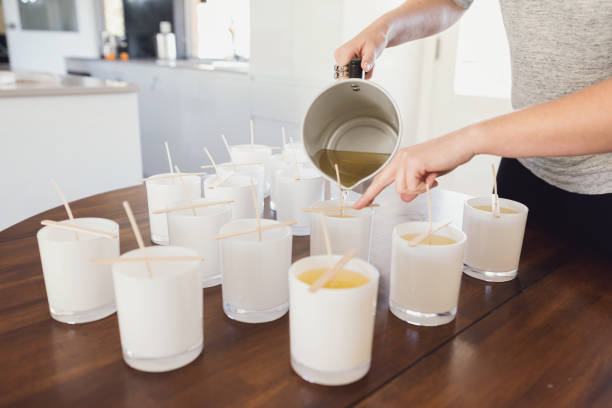
Candle making enables you to produce customized candles that suit your scent preferences and design style. The type of wax and containers you choose directly influence a candle’s appearance and how it burns. Using quality supplies, you can achieve even burns that match your design vision. Here are some of the key candle making supplies for beginners:
Selecting Candle Wax
The type of candle wax determines how your product burns and holds fragrance. Your selection impacts the melt consistency and how your fragrance throws. Some common wax types include:
- Beeswax: Beeswax is natural and non-toxic, producing little soot when burned. They also offer extended burn times compared to other wax types.
- Soy: Soy wax is often chosen for its ability to effectively hold and release fragrances. This enables candles to maintain a consistent scent throughout their lifespan.
- Paraffin: Paraffin wax also retains scents well, both when the candle is solid and when it is burning. This wax type blends well with dyes, making it easy to customize your candle design.
Choosing Wicks
The right wick type helps achieve an even burn, preventing uneven melting. Wick choice is typically influenced by the container size and the type of wax being used. If you want a steady, even flame, cotton wicks provide consistent performance as they are made from natural fibers. Wood wicks may lengthen a candle’s burn time and produce a crackling sound.
Wicks should be matched to your container diameter to avoid tunneling or excessive smoke. Understanding how your wick will perform with your wax and fragrance enables you to control the burn rate. Experimenting with different wick sizes and types may help you achieve the ideal combination for your candles.
Mixing Fragrance Oils
Adding fragrance to your candles contributes to the product’s scent and performance. Key candle making supplies include essential oils and fragrance oils blended by perfumers. Manufactured scents often have improved scent throws, while natural essential oils can provide therapeutic benefits. Scent throw refers to how far the fragrance travels and fills the air when the candle is burning. Intense scents can be suitable in large rooms, whereas light scents are better for smaller spaces. Analyze your area and preferred fragrance intensity when selecting an option.
Adding Candle Dye
Candle dye can be added to melted wax to create candles in various colors. Creators may use liquid dyes, flakes, or blocks to achieve their desired color. The type of dye also affects the color distribution and how bright it appears after the wax cools and hardens. Block and flake dyes usually offer intense colors, while liquid dyes can be used to create subtle shades.
It is possible to combine various dyes to produce special shades that fit your style or decor. Understanding how different dyes mix with specific wax types enables you to achieve consistent results and avoid streaks or patches of uneven color. Choosing the correct dye for your project allows you to maintain control over the look and quality of your piece.
Invest in Quality Candle Making Supplies
Buying candle making supplies from a trusted source is beneficial since you can rely on consistent quality and performance. This enables you to achieve an even color and scent distribution across several batches. Contact a quality supplier today to learn more about their available candle making supplies.
