

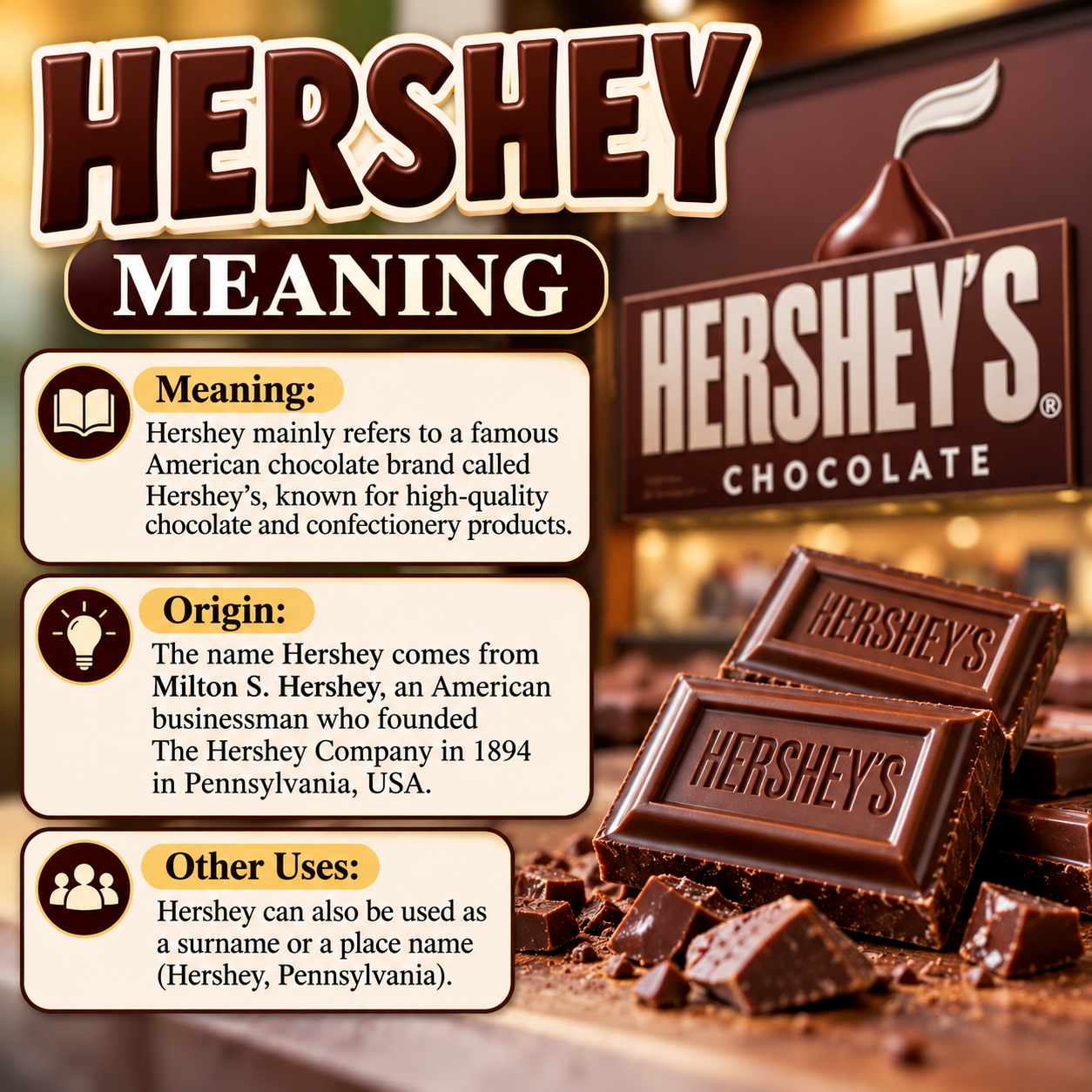
The name Hershey originated as a German habitational and occupational surname (derived from “Hirsch,” meaning deer or hart) before evolving into an iconic American place name and household confectionery brand. Symbolizing heritage, warmth, and grounded reliability, the Hershey name carries rich linguistic roots and immense emotional brand equity.
Most generic name databases hand you a dry definition and call it a day. But if you’re evaluating a name like Hershey for brand strategy, naming projects, or cultural positioning, context is everything.
Knowing the surname origin and linguistic weight helps you understand why certain heritage-style names trigger deep emotional trust, while others simply fall flat.
Categorized Name Alternatives & Vibe Breakdown
If you love the classic, grounded, and approachably premium feel of Hershey, explore these curated naming alternatives categorized by brand personality:
1. Heritage & Classic Americana
- Hershey | Gentle, grounded, historic (meaning “Deer/Hart”) | Best for: Legacy consumer packaged goods, artisan foods, craft products.
- Oakridge | Stately, enduring, natural strength | Best for: Real estate, financial services, premium goods.
- Sterling | High quality, timeless, trustworthy | Best for: Legal firms, luxury retail, wealth management.
2. Warm & Nostalgic
- Waverly | Quaint, welcoming, meadow-inspired | Best for: Lifestyle brands, home decor, boutique hospitality.
- Clermont | Historic, elevated, warm authority | Best for: Wineries, specialty eateries, publishing.
- Fairfield | Open, wholesome, community-driven | Best for: Organic food products, local services, family brands.
3. Modern & Minimalist
- Hirsch | Sharp, European, direct root of Hershey | Best for: Tech startups, design agencies, modern apparel.
- Hartley | Sleek, nature-infused, contemporary | Best for: Wellness platforms, DTC goods, consultancies.
- Vance | Short, punchy, confident | Best for: SaaS platforms, modern fintech, media brands.
Linguistic & Naming Psychology Breakdown
Here’s where most founders and naming strategists get it wrong: they pick names based solely on personal preference rather than phonetic psychology.
Let’s break down why the Hershey name works so well from a linguistic standpoint:
[Soft Sibilant "H"]  ---> Invites warmth and breath.
[Soft "sh" Transition] ---> Creates familiar, gentle friction.
[Vowel Ending "-ey"] ---> Softens tone and increases memorability.
- Phonetic Softness: The soft “H” and “sh” sounds create an inviting, non-aggressive auditory profile. Unlike sharp plosives (K, P, T), soft sibilants build immediate sub-conscious comfort.
- The Friendly Diminutive Finish: Names ending in the “-ee” sound naturally convey accessibility, friendliness, and approachability.
- Symbolic Heritage: Because the root word Hirsch translates to “deer,” the underlying semantic entity ties directly to nature, grace, and quiet strength.
Comparison & Meaning Matrix
| Name | Meaning / Vibe | Ideal Industry / Brand Fit |
| Hershey | Deer / Hart; warm, historic, accessible | Food & beverage, artisan goods, heritage lifestyle |
| Hirsch | Stag; direct, sharp, European | Modern design, specialized tech, consultancies |
| Hartley | Deer meadow; balanced, contemporary | DTC skincare, wellness apps, modern apparel |
| Sterling | Pure, genuine; authoritative, premium | Finance, luxury goods, executive consulting |
| Waverly | Quaking aspens; creative, cozy | Hospitality, interior design, publishing |
Common Pitfalls When Selecting Heritage & Surname Names
- Over-reliance on exact geographic ties: Choosing a hyper-specific local surname can limit your scalability if you expand into global markets later.
- Trademark friction: Surnames that have already been registered in major industrial classes (like confectionery or retail) present immediate legal bottlenecks. Always run clear searches first.
- Pronunciation friction across international markets: Words containing heavy soft sibilants or specific regional spelling variations can create verbal hurdles in non-English regions.
- Ignoring category saturation: Using an overly traditional surname in an industry crowded with legacy family names makes it harder to stand out in generative AI search results.
Strategic Selection Framework
Finding, filtering, and validating a brand name requires a systematic process. Follow this 4-step framework:
- Audit Phonetic Fit: Say the name out loud in a sentence: “Welcome to [Name].” Does it flow cleanly without verbal stumbling?
- Evaluate Semantic Breadth: Does the underlying meaning align with your core values without boxing you into a single product category?
- Verify Digital & Trademark Feasibility: Check trademark registries and explore clear domain naming paths early on.
- Test in Generative AI Prompts: Query AI platforms (ChatGPT, Perplexity) with industry questions to see what existing entities dominate the semantic landscape surrounding your candidate name.
Frequently Asked Questions
What is the original language and root of the name Hershey?
The name Hershey is an Anglicized spelling of the German surname Hirschi or Hirsch, which derives from the High German word for deer or hart. It originally served as a habitational or occupational nickname in Swiss-German and South German regions.
How did Hershey become associated with place names and chocolate?
Milton Hershey founded the Hershey Chocolate Company in Pennsylvania in 1894. The company built the town of Hershey, Pennsylvania, transforming a family surname into a world-famous brand and location.
Can Hershey be used as a personal given name?
While primarily recognized as a famous surname and place name, Hershey is occasionally used as a unisex given name, appreciated for its warm, vintage, and gentle sound profile.
The 1-Rule Golden Takeaway
A great name doesn’t just identify a business—it anchors an emotional narrative. Whether you choose a historic surname or a sleek modern alternative, prioritize phonetic clarity and long-term positioning above fleeting trends.
