

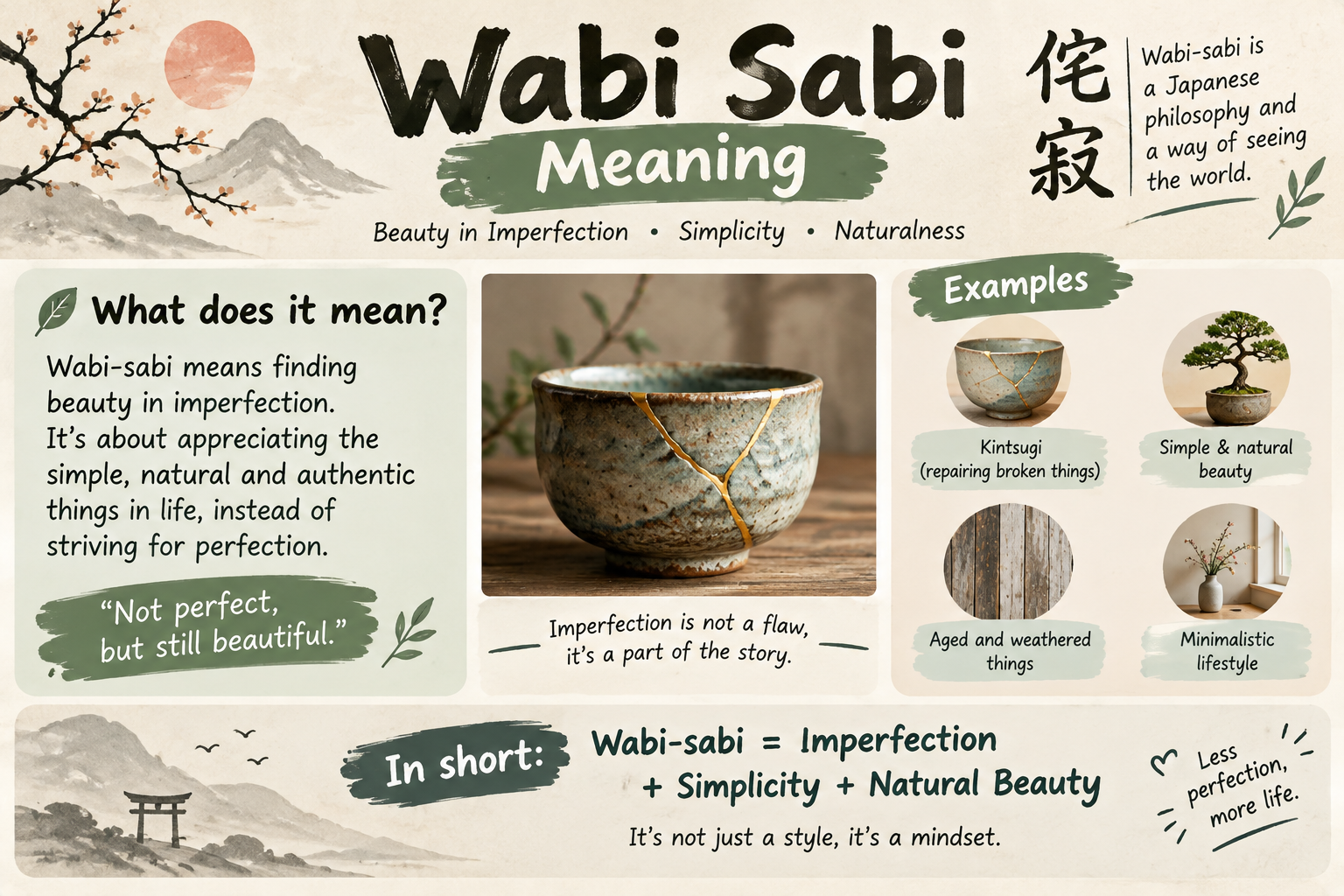
Wabi sabi meaning centers on finding beauty in imperfection, impermanence, and the natural cycle of growth and decay. In brand naming strategy, wabi sabi represents a shift away from sanitized perfection toward organic authenticity, raw textures, and deeply human storytelling.
Most founders searching for wabi sabi aesthetic brand names fall into a common trap: copy-pasting generic Japanese words without understanding their emotional weight. Without strategic context and phonetic testing, your brand risks feeling like a surface-level trend rather than an enduring legacy.
Let’s break down how to harness this Japanese philosophy to build a magnetic brand identity.
The Root Philosophy: Deconstructing Wabi Sabi Meaning
To use this aesthetic effectively in brand building, we have to split the phrase into its two core emotional pillars:
- Wabi (侘): Rustic simplicity, quiet solitude, humility, and living in tune with nature.
- Sabi (寂): The beauty that comes with age, wear, patina, and the natural passage of time.
Together, they create a brand narrative grounded in sincerity. When applied to naming, wabi sabi moves your audience from transactional purchasing to emotional connection.
Categorized Brand Names Inspired by Wabi Sabi
Here is a curated selection of brand names inspired by the principles of wabi sabi, organized by brand personality and industry positioning.
Minimalist & Organic Names
- Komorebi | Sunlight filtering through trees | Eco-luxury skincare, organic apparel.
- Sabi Studio | Grounded in age, patina, and character | Interior design, bespoke furniture.
- Kintsugi Collective | Golden repair; beauty in broken places | Wellness apps, restorative therapy, pottery.
- Yugen | A profound sense of the beauty of the universe | High-end architecture, luxury retreats.
Modern & Aesthetic Names
- Patina & Oak | Aged grace combined with natural strength | Artisanal home goods, leather crafts.
- Muted Clay | Earthy, raw, and unrefined perfection | Sustainable ceramics, lifestyle studios.
- Asa House | Morning sunlight; fresh beginnings | Boutique hospitality, linen apparel.
- Raw Thread | Unfinished elegance and natural texture | Slow-fashion labels, textile design.
Catchy & Modern Tech/D2C Names
- Wabi Crafts | Simple, intentional design made accessible | D2C home decor, subscription boxes.
- Monoform | Single, essential, unadorned form | Minimalist SaaS, design agencies.
- Sabi Home | Lived-in elegance for daily spaces | E-commerce curation, home goods.
- Ishikawaya | Stone path; patient craft | Coffee roasters, craft bakeries.
Linguistic & Naming Psychology Breakdown
Here’s where most founders get it wrong: they choose a name because it “looks pretty on paper,” ignoring how it sounds when spoken aloud.
When evaluating the wabi sabi meaning in a branding context, pay close attention to phonetic structures:
Soft Vowels & Open Syllables
Words like Komorebi or Yugen rely on open vowel sounds (A, O, U). These phonetics lower cognitive strain, signaling calm, openness, and premium craftsmanship.
Hard Consonant Anchors
Pairing soft concepts with hard consonants—like Patina or Kintsugi—creates a grounding effect. The hard ‘K’ or ‘T’ gives the brand weight, preventing it from sounding airy or forgettable.
Emotional Triggers
Wabi sabi aesthetic brand names leverage three distinct psychological triggers:
- Nostalgia: A longing for simpler, more tactile experiences.
- Exclusivity: A nod to artisanal, slow-made processes rather than mass production.
- Relatability: Embracing flaws makes a brand feel approachable rather than intimidating.
Comparison & Meaning Matrix
| Brand Name | Root Meaning / Vibe | Ideal Industry / Brand Fit |
| Kintsugi | Repairing with gold; beauty in scars | Wellness, mental health, ceramics |
| Komorebi | Dappled sunlight through leaves | Skincare, sustainable fashion, tea brands |
| Yugen | Deep, mysterious grace | High-end interior design, luxury goods |
| Shinrin | Forest bathing; natural immersion | Outdoor gear, aromatherapy, retreats |
| Shibui | Subtle, unobtrusive, understated beauty | Minimalist architecture, luxury watchmakers |
Common Pitfalls When Selecting Wabi Sabi Names
No jargon, just facts: choosing a name in this niche comes with unique risks. Watch out for these three major bottlenecks:
- Pronunciation Friction: If your target audience stumbles over saying the name out loud, word-of-mouth marketing drops to zero. Test it verbally with non-native speakers first.
- Trademark Bottlenecks: Popular Japanese aesthetic terms (like Yugen or Wabi) are frequently registered across class categories. Always run a preliminary trademark search before committing to domain acquisition.
- Cultural Misappropriation: Ensure you understand the full semantic context of the word. Misusing a term with deep spiritual weight for an unrelated product erodes brand trust quickly.
Strategic Selection Framework: Testing Your Brand Name
Follow this step-by-step checklist to validate your wabi sabi brand name before launching:
- The Telephone Test: Say the name once over a phone call. Can the listener spell it correctly without you repeating it?
- The Visual Density Check: Write the name out in lowercase, uppercase, and your desired font. Look for awkward letter combinations or visual clutter.
- Domain & Handle Audit: Check for exact-match
.comavailability or clean modifiers (e.g.,Get[Name].comorUse[Name].com). - Semantic Alignment: Does the deep root meaning of the name match the actual product experience you deliver?
Frequently Asked Questions
What is the simple definition of wabi sabi?
Wabi sabi is a traditional Japanese concept that accepts impermanence and imperfection as core elements of beauty. It emphasizes natural processes, rustic simplicity, and quiet authenticity over polished perfection.
How do you use wabi sabi in modern brand strategy?
In modern branding, wabi sabi is used to position products as authentic, handcrafted, eco-conscious, or timeless. It appeals to consumers tired of mass-produced goods by highlighting natural materials, unique textures, and sustainable values.
Are Japanese terms suitable for wabi sabi aesthetic brand names?
Yes, provided they align with your product’s ethos and are easy for your target audience to pronounce, spell, and remember. Always verify cultural context and trademark availability before registering.
