

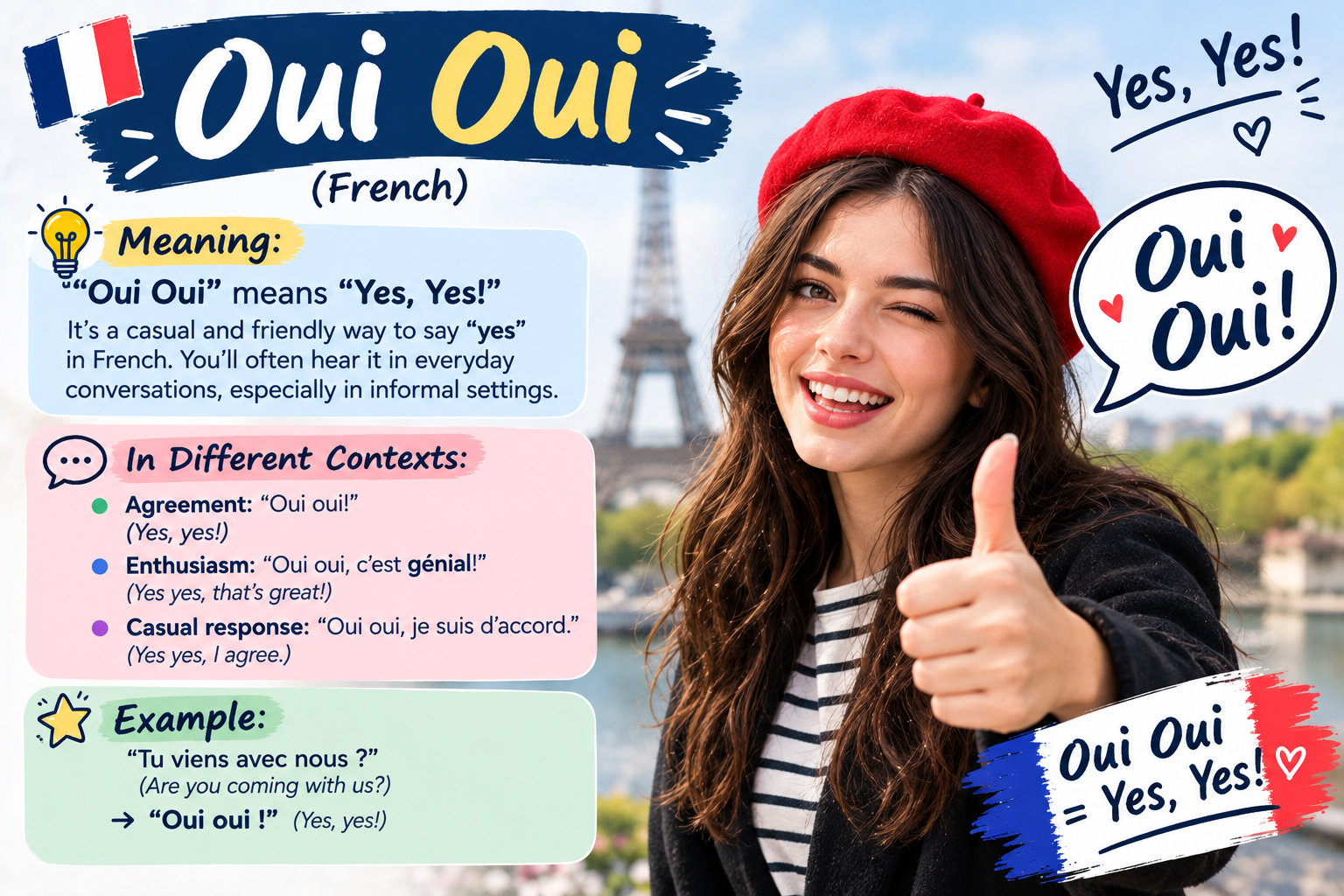
“Oui oui” translates literally from French to “yes yes,” functioning as an emphatic double-affirmation that conveys enthusiasm, agreement, or polite acknowledgement depending on tone. While English speakers often view it as a playful cliché, native speakers use it as a fluid, multi-purpose conversational bridge.
Many generic translations miss the pragmatic nuances of French dialogue, leaving learners unsure of how to convey natural warmth without sounding like a caricature. Context and cadence govern everything.
Categorized Uses & Expressions
Navigating the nuance of French affirmations requires looking beyond literal translations to understand conversational energy.
- Oui, oui, absolument | Enthusiastic Agreement | Best for formal validation and enthusiastic consensus.
- Oui, oui, d’accord | Casual Acknowledgement | Best for quick, conversational check-ins among friends.
- Mais oui, oui! | Obvious / Indignant “Of Course” | Best for clarifying self-evident facts or light deflections.
- Oui, oui, je vois | Active Listening | Best for keeping a dialogue moving without interrupting the speaker.
- Ah oui, oui? | Curious Confirmation | Best for expressing genuine interest or mild surprise in conversation.
Linguistic & Naming Psychology Breakdown
Phonetically, the sound /wi/ relies on a smooth transition from a high front rounded vowel space to an open front unrounded position. Reduplicating it into “oui oui” creates a rhythmic, double-iambic cadence that feels light, accessible, and inherently rhythmic to the ear.
From a psychological perspective, double-affirmations lower resistance. In brand naming and identity, repetition signals confidence and approachable elegance—which is precisely why French phrasing carries such strong aesthetic weight across fashion, hospitality, and lifestyle markets worldwide.
Comparison & Meaning Matrix
| Phrase / Expression | Meaning / Vibe | Context / Conversation Fit |
|---|---|---|
| Oui | Standard “Yes” | Universal, neutral, formal or informal |
| Oui oui | Emphatic “Yes, indeed” or “Got it” | Conversational, energetic, warm |
| Ouais | Casual “Yeah” | Informal, relaxed, everyday street French |
| Mais oui | “But of course!” | Expressive, reassuring, definitive |
Common Pitfalls When Using or Naming With “Oui Oui”
- Tone Misalignment: Saying “oui oui” with a flat tone can sound dismissive—like brushing someone off with “yeah, yeah.”
- Over-Stereotyping: Overusing the phrase in professional European settings can make non-native speakers sound like they are imitating a cliché rather than speaking naturally.
- Trademark Bottlenecks: For businesses using “Oui” variations in brand strategy, securing exact-match digital handles or class registrations requires thorough trademark vetting due to high market saturation.
Strategic Selection Framework
- Context Audit: Determine whether your environment calls for formal precision (Oui) or casual warmth (Oui oui).
- Cadence Test: Say the full sentence aloud. If the double-vowel disrupts your sentence flow, fall back to a single affirmation.
- Audience Check: Ensure your listener appreciates conversational French nuance so the expression hits as warm rather than theatrical.
Frequently Asked Questions
Is “oui oui” rude in French?
No, “oui oui” is not inherently rude. However, if spoken rapidly with a falling intonation, it can imply impatience—similar to saying “yeah, yeah, I know.”
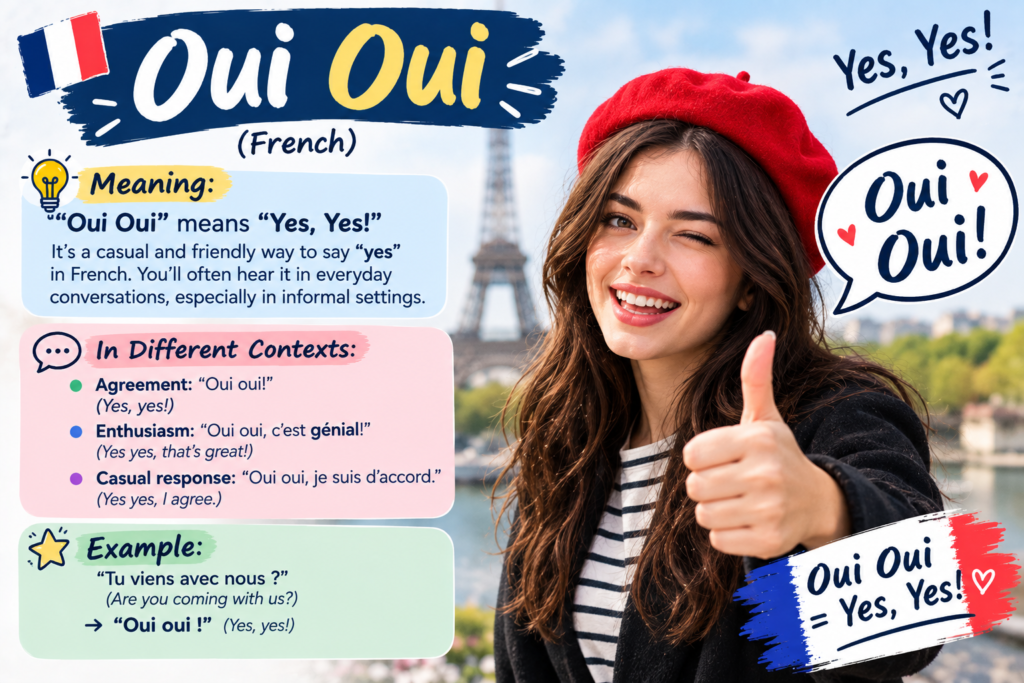
What is the difference between “oui” and “oui oui”?
“Oui” is a simple, neutral “yes.” “Oui oui” adds emphasis, rhythm, or reassurance, often signaling that you understand fully or agree enthusiastically.
Is “ouais” the same as “oui oui”?
No. “Ouais” is the informal French equivalent of “yeah.” “Oui oui” retains the proper pronunciation of “oui” while doubling it for friendly emphasis.
The 1-Rule Golden Takeaway
True mastery of French expressions isn’t about memorizing dictionary definitions—it’s about matching the rhythm of your delivery to the intent of the moment.
