

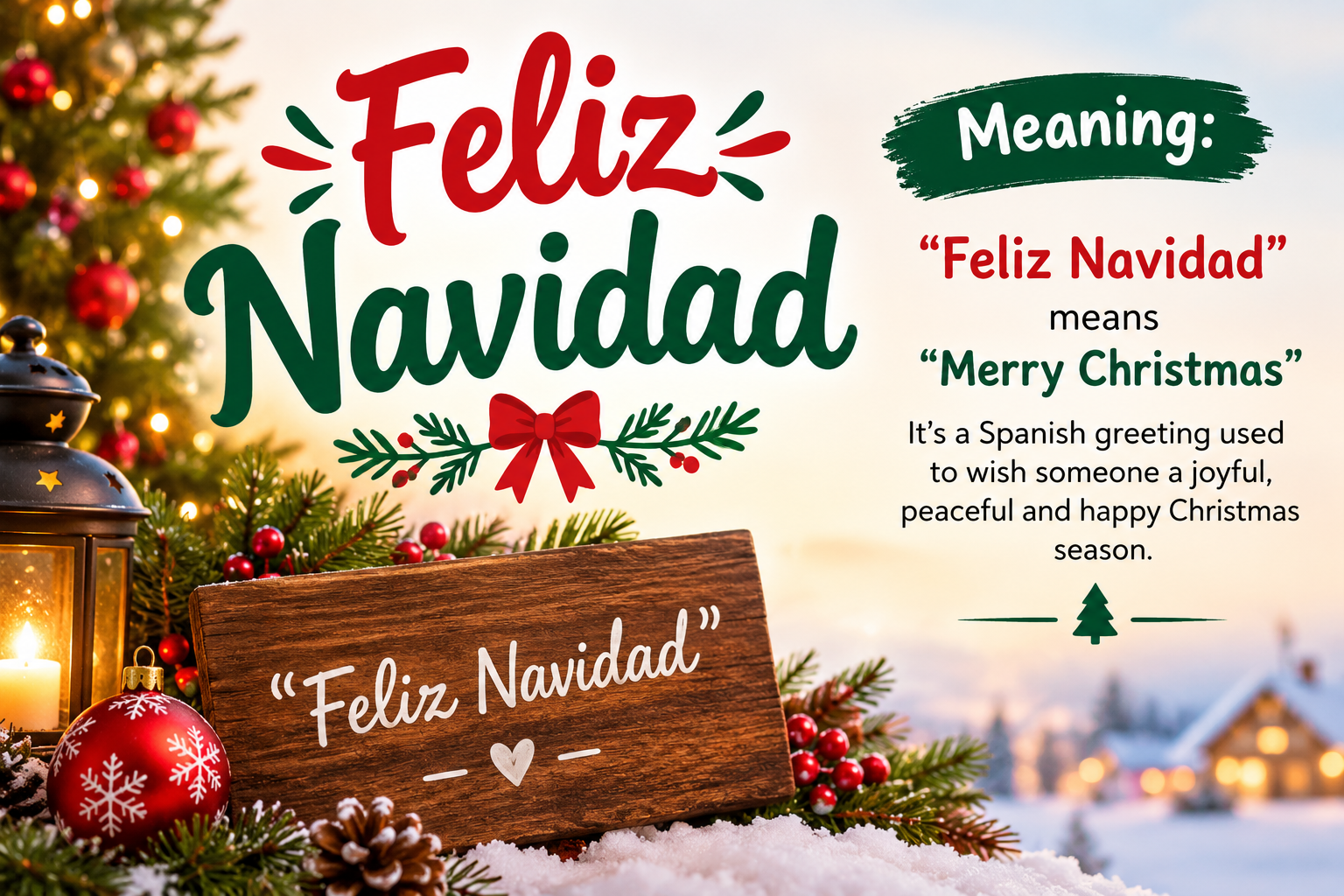
Feliz Navidad literally translates to “Happy Christmas” or “Merry Christmas” in Spanish, originating from the Latin words felix (happy/fortunate) and nativitas (birth). Beyond its literal dictionary definition, the phrase represents the core holiday greeting across the Hispanic world and serves as a global symbol of cross-cultural festive celebration.
When people search for the Feliz Navidad meaning, they are often looking for more than just a direct Spanish-to-English translation. They want to understand the cultural nuance, the story behind José Feliciano’s iconic song lyrics, and how to use the phrase authentically during the holiday season. Here is a complete breakdown of its linguistic roots, artistic impact, and cultural depth.
The Linguistic and Etymological Origins of Feliz Navidad
Understanding the full meaning behind Feliz Navidad requires looking at the two Latin root words that form its base:
- Feliz: Derived from the Latin adjective felix, meaning “happy,” “lucky,” “fruitful,” or “blessed.”
- Navidad: Derived from the Latin noun nativitas, meaning “birth.” In a Christian cultural context, it specifically denotes the Nativity—the birth of Jesus Christ.
When combined, Feliz Navidad serves as both a warm seasonal greeting and a well-wish for prosperity and happiness during the Christmas period.
Word Origin & Meaning
“Merry Christmas”
Categorized Feliz Navidad Variations and Related Greetings
Depending on the context, tone, and audience, Spanish speakers use several variations of holiday wishes alongside Feliz Navidad:
- Feliz Navidad y Próspero Año Nuevo | Traditional & Warm | Best for formal greeting cards, business holiday messages, and broad social gatherings.
- Feliz Nochebuena | Specific & Festive | Best for Christmas Eve celebrations, family dinners, and midnight gatherings.
- Felice Fiestas | Inclusive & Modern | Best for general seasonal greetings across December and early January.
- Que tengas una Feliz Navidad | Personal & Direct | Best for close friends, colleagues, and intimate family correspondence.
The Story and Lyric Breakdown of the Song “Feliz Navidad”
Written and recorded in 1970 by Puerto Rican singer-songwriter José Feliciano, the song Feliz Navidad transformed a simple two-word Spanish phrase into a global holiday anthem.
Why the Song Transcends Language Barriers
- Bilingual Simplicity: Feliciano deliberately kept the Spanish lyrics basic so non-Spanish speakers could sing along effortlessly.
- Repetitive Hook: The core structure alternates between Spanish holiday blessings and a direct English sentiment.
- Acoustic & Latin Rhythm: Incorporating traditional Puerto Rican cuatro rhythms alongside pop production gave it a universal appeal.
Comparison Matrix: Holiday Greetings Across Romance Languages
To understand the linguistic positioning of Feliz Navidad, compare it with equivalent festive greetings in other Romance languages derived from Latin:
| Language | Phrase | Literal Translation | Cultural Vibe |
| Spanish | Feliz Navidad | Happy Nativity / Merry Christmas | Warm, rhythmic, traditional |
| Portuguese | Feliz Natal | Happy Birth / Merry Christmas | Festive, family-centered |
| Italian | Buon Natale | Good Nativity | Classic, formal, traditional |
| French | Joyeux Noël | Joyous Nativity | Elegant, celebratory |
| Romanian | Crăciun Fericit | Happy Christmas | Reverent, traditional |
Common Misconceptions About Feliz Navidad
- Assuming “Navidad” means “Year”: Due to the fast tempo of Feliciano’s song, non-native speakers often mistake Navidad for “New Year.” Navidad specifically refers to Christmas, while Año Nuevo means New Year.
- Overlooking “Próspero Año y Felicidad”: The famous follow-up line translates to “A prosperous New Year and happiness,” reflecting a traditional Spanish wishes for economic stability and joy in the upcoming year.
- Confusing Nochebuena and Navidad: In Hispanic culture, Nochebuena (Christmas Eve) is often the primary feast and gift-giving night, whereas Navidad (Christmas Day) focuses on family rest and traditional meals.
Strategic Guide to Using Feliz Navidad in Brand and Cultural Messaging
If you are incorporating Feliz Navidad into seasonal campaign messaging or global brand copy, keep these guidelines in mind:
- Maintain Accent Marks: Always write Feliz Navidad with proper capitalization, and if including extended phrases like Próspero Año, maintain the tilde (ñ) on Año to avoid altering the word’s meaning entirely.
- Pair with Inclusive Imagery: Ensure imagery reflects authentic Latin American or Spanish holiday traditions, such as Poinsettias (Flor de Nochebuena) or Parrandadas.
- Audience Personalization: Use Feliz Navidad for specific, festive greetings, and opt for Felices Fiestas when targeting broader, non-denominational global audiences.
Frequently Asked Questions
What does “Feliz Navidad” literally mean in English?
“Feliz Navidad” literally translates to “Happy Christmas” or “Merry Christmas” in English. “Feliz” means happy, and “Navidad” means Christmas or Nativity.
How do you pronounce “Feliz Navidad”?
It is pronounced feh-LEEZ nah-vee-DAHD.
What is the response to “Feliz Navidad”?
The most common response is “Igualmente” (Likewise) or “¡Feliz Navidad para ti también!” (Merry Christmas to you too!).
Who wrote the famous song “Feliz Navidad”?
The song was written and originally performed by the Puerto Rican singer and songwriter José Feliciano in 1970.
The Golden Rule of Seasonal Cultural Greetings
Authentic seasonal communication relies on simplicity and shared human emotion—the phrase Feliz Navidad endures globally because it bridges linguistic divides through an accessible message of warmth, hope, and togetherness.
