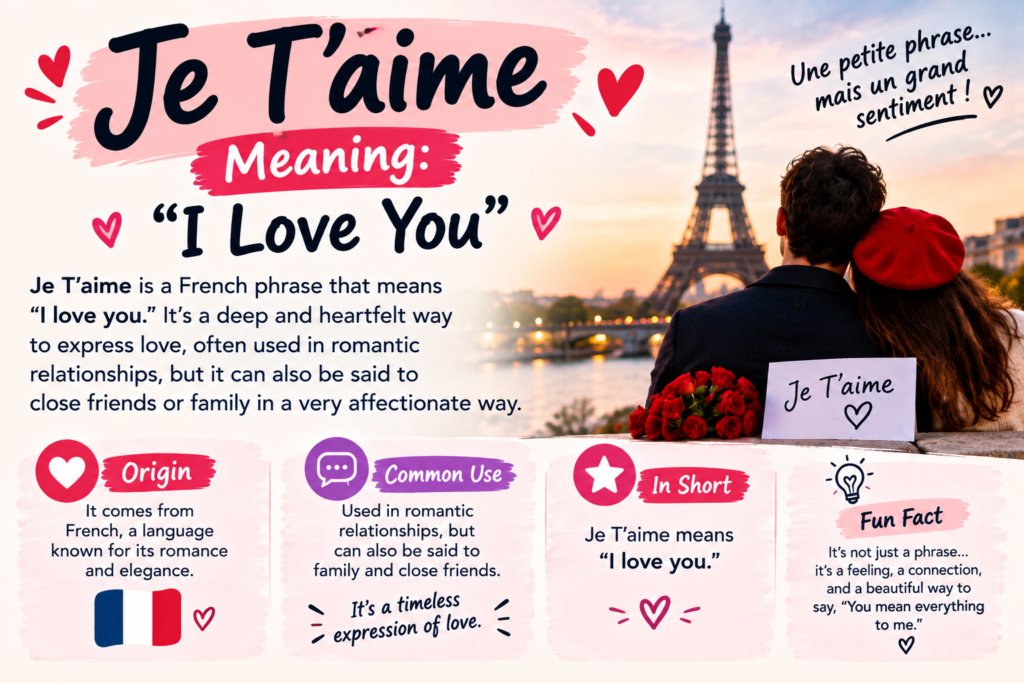

Je taime meaning translates directly from French to English as “I love you,” serving as the ultimate declaration of deep romantic affection, devotion, and core emotional intimacy. Rooted in the verb aimer, this iconic phrase carries profound linguistic weight, balancing poetic romance with absolute intentionality in French culture.
Many founders, creatives, and romantic writers hunt for curated lists of terms of endearment, yet most generic roundups fall short because they lack strategic context. Understanding French love expressions requires looking beyond literal translations to grasp how phonetic cadence, emotional resonance, and cultural nuances shape perception.
The Nuanced Meaning Behind “Je T’aime”
In French, word order and modifiers change everything. While “je t’aime” is reserved for deep romantic partners or immediate family, adding an adverb actually softens the sentiment rather than strengthening it.
- Je t’aime: “I love you” (Deep, passionate, unconditional romantic love).
- Je t’aime bien: “I like you” or “I like you a lot” (Friendly, casual affection).
- Je t’aime beaucoup: “I like you very much” (Warm, affectionate, but platonically bounded).
- Je t’aime à mourir: “I love you to death” (Dramatic, intense poetic devotion).
Understanding these distinctions helps prevent real-world cultural missteps and guides better creative choices when choosing brand names, romantic aliases, or project titles.
Categorized French Romantic Terms & Name Ideas
When crafting a brand, personal handle, or poetic identity inspired by French romantic aesthetics, matching the name to the right aesthetic vibe is crucial.
Modern & Sleek
- Aimer | To love; smooth and minimal | High-end fashion, minimalist skincare
- Mon Chéri | My darling; timelessly chic | Artisanal confectionery, luxury gifting
- L’Amour | The love; direct and iconic | Boutique hotels, romantic fragrance lines
Aesthetic & Poetic
- Mon Cœur | My heart; intimate and warm | Fine jewelry, bespoke wedding planning
- Douceur | Sweetness/Softness; gentle elegance | Organic body care, nursery apparel
- Coup de Foudre | Love at first sight; dramatic spark | Matchmaking platforms, event venues
Minimalist & Catchy
- Beau | Handsome; clean and structured | Men’s grooming, architectural design
- Jolie | Pretty; bright and approachable | Clean beauty, floral design studios
- Chou | Sweetheart (lit. “cabbage”); playful | Children’s brands, Parisian cafes
Linguistic & Naming Psychology Breakdown
Here’s where most brand strategists get it wrong: they choose names based on meaning alone while ignoring phonetic psychology.
The phrase je taime meaning carries emotional weight largely due to its soft consonant sounds and flowing vowel structures. The gentle “J” sound (/ʒ/) combined with the soft nasal “aime” creates an acoustic profile known in linguistics as phonaesthetics—sounds that feel inherently pleasing, smooth, and intimate to the human ear.
Integrating authentic French love expressions into brand positioning taps directly into aspirational consumer psychology:
- Syllabic Flow: French words rarely end in harsh, hard stops. This fluid rhythm conveys luxury, high fashion, and sophistication.
- Sensory Association: Soft fricatives evoke feelings of closeness, comfort, and premium quality.
- Cultural Authority: French linguistic roots instantly signal heritage, romance, and artistic craftsmanship across global markets.
French Expression Comparison & Meaning Matrix
| Expression / Name | Meaning / Vibe | Ideal Industry / Brand Fit |
| Je T’aime | Deep romantic love, devotion | Bridal couture, high jewelry, luxury perfume |
| Mon Trésor | “My treasure”, precious, rare | Keepsake gifts, premium watchmakers, finance |
| Mon Ange | “My angel”, pure, gentle | Sustainable apparel, infant care, wellness |
| La Vie en Rose | “Life in pink”, optimistic romance | Lifestyle media, travel agencies, wine & spirits |
| Bisou | “Little kiss”, playful, warm | Casual cosmetics, bakery chains, social apps |
Common Pitfalls When Selecting Romantic Names
Choosing a romantic or French-inspired name seems straightforward, but simple traps can halt your momentum.
- Pronunciation Friction: If your audience cannot easily pronounce or spell the name after hearing it once, word-of-mouth growth drops sharply.
- Meaning Shift Missteps: Confusing Je t’aime with Je t’aime bien can entirely alter your brand tone or messaging context.
- Trademark Bottlenecks: Extremely common French phrases may face high trademark saturation in key commercial classes. Always run preliminary trademark searches early.
- Scaling Limitations: Selecting a name that is overly specific to romance can restrict your business if you expand into broader product lines later.
Strategic Selection Framework
To validate and select the ideal French-inspired name for your project or brand, follow this four-step strategy:
- Phonetic Test: Say the name out loud five times. Ensure it flows effortlessly without awkward mouth movements or tongue trips.
- Context Alignment: Verify that the literal definition matches the underlying emotional tone of your offering.
- Digital Availability Check: Search for domain availability (.com prioritized) and social media handles across all primary platforms.
- Global Perception Audit: Confirm the phrase carries positive, unambiguous connotations across your target geographic markets.
Frequently Asked Questions
What is the primary difference between “Je t’aime” and “Je t’adore”?
While both express strong affection, je taime meaning centers on deep emotional and romantic love. “Je t’adore” translates to “I adore you” and can be used intensely in romance or more lightly to express strong enthusiasm for friends, objects, or ideas.
How do you respond when someone says “Je t’aime”?
The most authentic response is “Moi aussi, je t’aime” (I love you too) or simply “Moi aussi” (Me too).
Can French romantic terms be used as modern brand names?
Yes. Authentic French love expressions work exceptionally well in industries like luxury, fashion, beauty, and hospitality, where emotional resonance and sensory appeal drive customer loyalty.
The 1-Rule Golden Takeaway
Never sacrifice phonetic clarity for poetic depth—the best romantic names roll off the tongue as effortlessly as they touch the heart.