
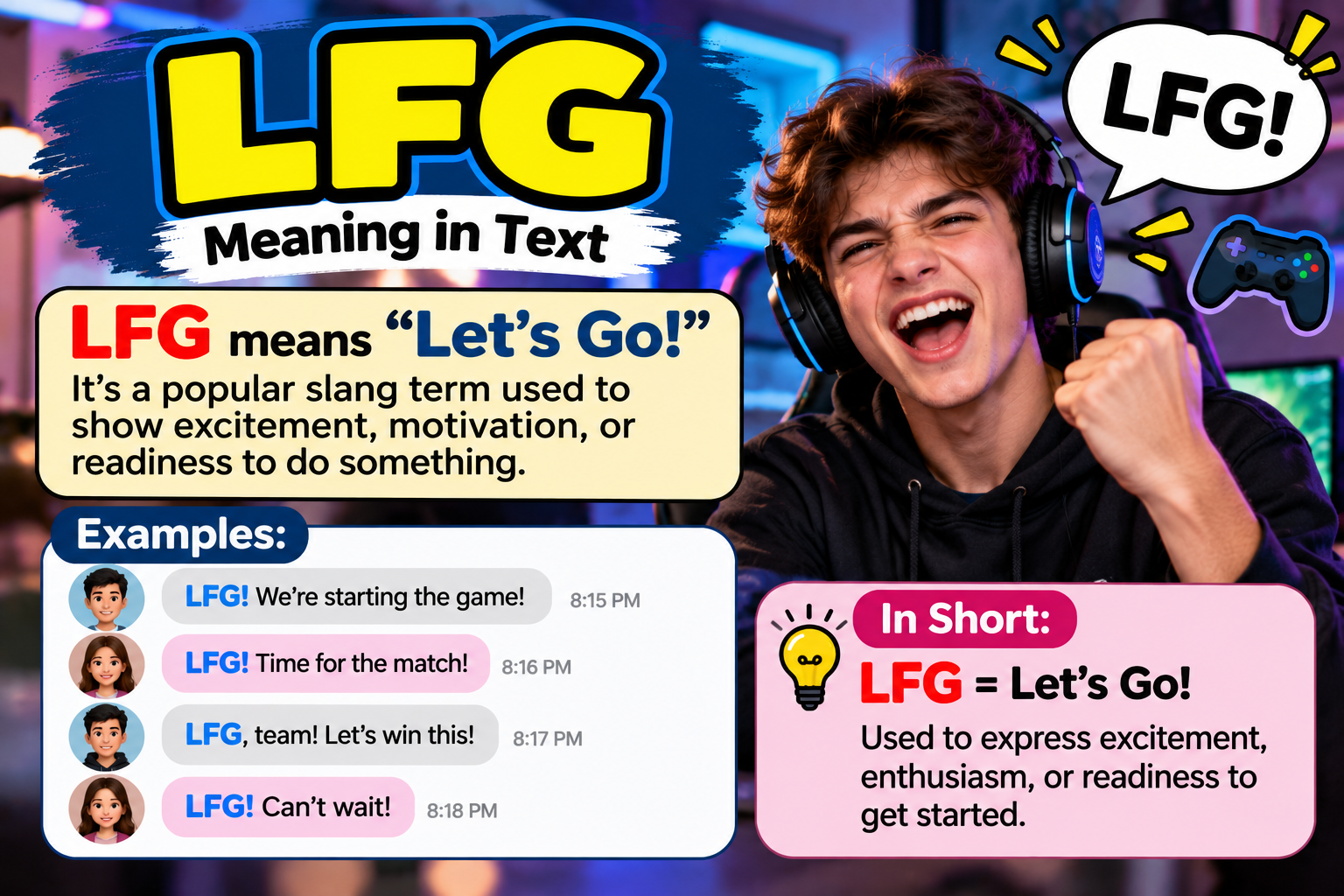
What does LFG mean? LFG primarily stands for “Let’s Fing Go” in popular internet culture, crypto, and sports slang to signal peak excitement, hype, or triumphant momentum.* In gaming contexts, LFG traditionally stands for “Looking For Group,” a functional phrase players use to find teammates for raids and multiplayer matches.
Whether you are navigating modern slang, online gaming, or decoding web3 community culture, understanding how three-letter acronyms operate is critical. Single-letter and acronym-based terminology carry massive emotional energy, transforming simple communication into powerful tribal markers for communities and digital-first brands alike.
The Dual Origins: How LFG Conquered the Internet
The phrase carries two distinct definitions depending on where you encounter it online.
1. “Looking For Group” (The Classic Gaming Origin)
In early MMORPGs like EverQuest and World of Warcraft, players needed an efficient way to assemble teams for raids and dungeons. Typing “LFG” into public chat channels signaled availability to join an existing group. It was purely functional, low-friction, and practical.
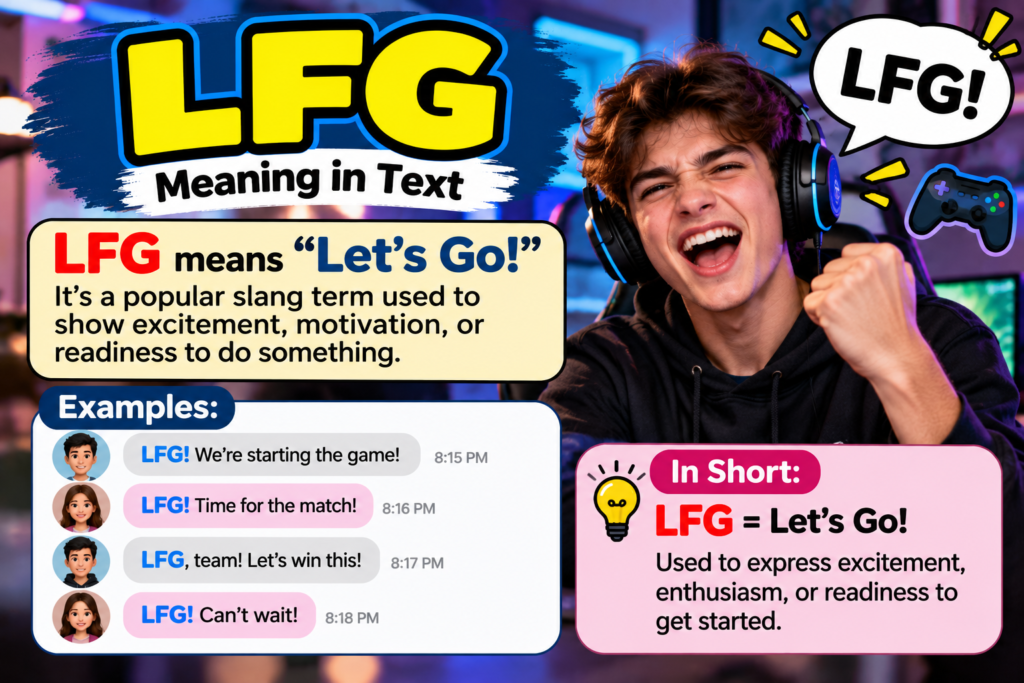
2. “Let’s F***ing Go” (The Modern Hype Definition)
As Twitch streams, Reddit, sports culture, and crypto communities merged on platforms like X (formerly Twitter) and Discord, LFG shifted from a functional search query into an exclamation of intense enthusiasm. Today, it serves as the ultimate rallying cry when:
- A team scores a game-winning point.
- A crypto asset breaks an all-time high.
- A major product launch goes live.
- A creator hits a massive subscriber milestone.
Categorized Acronym Variations & Related Slang
Understanding LFG requires knowing the adjacent internet expressions used alongside it. Here is a curated breakdown of related acronyms, their meanings, and where they fit best:
- LFG | Let’s F*ing Go / Looking For Group | Best For: High-energy hype, product launches, gaming team lobbies.
- WAGMI | We’re All Going To Make It | Best For: Community solidarity, optimism, startup rallies.
- LFM | Looking For More | Best For: MMO party leaders seeking additional players to fill a roster.
- BTFD | Buy The F*ing Dip | Best For: Financial trading, crypto market sentiment, high-risk strategies.
- NGMI | Not Going To Make It | Best For: Sarcastic commentary on bad decisions or outdated tactics.
- IYKYK | If You Know, You Know | Best For: Insider knowledge, exclusive brand drops, niche memes.
Linguistic & Naming Psychology Breakdown
Why do ultra-short acronyms like LFG trigger such intense engagement? The answer lies in phonetic speed and tribal exclusivity.
  HIGH VELOCITY         EXCLUSIVITY             MEMETIC POWER
┌─────────────────┐   ┌─────────────────┐   ┌─────────────────┐
│ 3 Hard Consonants│ + │ Insider Jargon  │ = │ Explosive Brand │
│ (L - F - G)     │   │ (Tribal Signal) │   │ Momentum        │
└─────────────────┘   └─────────────────┘   └─────────────────┘
Phonetic Friction vs. Speed
LFG relies on three hard consonant sounds ($L – F – G$). When pronounced letter-by-letter or shouted as a phrase, it delivers immediate vocal impact. There is zero phonetic drag, making it ideal for fast-moving live chats, social posts, and quick messaging.
Emotional Triggers
- In-Group Bias: Using modern slang signals to your audience that you understand current internet culture without needing a translation layer.
- Urgency and Momentum: High-energy expressions create an immediate sense of action, signaling to observers that something important is happening right now.
- Dopamine Priming: Shorter words and punchy acronyms accelerate reader processing time, boosting engagement metrics on digital platforms.
Comparison & Meaning Matrix
| Term / Expression | Primary Meaning & Vibe | Ideal Industry / Brand Fit | Target Demographic |
| LFG | High-energy enthusiasm, celebratory hype | Gaming, Crypto, Sports Apparel, Web3 | Gen Z, Millennials, Esports Fans |
| LFM | Functional recruitment, team assembly | Gaming Guilds, SaaS Collaboration Tools | Gamers, Remote Teams |
| WAGMI | Collective optimism, long-term belief | FinTech, Community Platforms, Startups | Crypto Enthusiasts, Founders |
| IYKYK | Exclusive, insider-focused, subtle flex | Streetwear, Luxury Brands, Private Clubs | Trendsetters, Culture Buffs |
Common Pitfalls When Using Slang in Branding
Using internet slang can invigorate a brand’s tone, but executing it incorrectly can severely damage credibility. Here’s where most founders get it wrong:
- Forced Authenticity: Inserting high-energy acronyms into conservative industries (e.g., legacy banking or healthcare) creates tone deafness and alienates audiences.
- Rapid Aging Risk: Trendy internet expressions can fade quickly. Relying entirely on a fleeting meme for core brand identity risks making your business look outdated within a few years.
- Trademark & Domain Bottlenecks: Ultra-short slang phrases are heavily contested. Securing clean exact-match domains or clean trademark clearances for hype terms is exceedingly difficult.
- Context Confusion: Failing to recognize whether your audience interprets an acronym like LFG as the classic gaming term (“Looking For Group”) or the hype expression (“Let’s F***ing Go”) can lead to mixed messaging.
Strategic Selection Framework for Modern Brand Names
If you want to build a brand identity that captures the energy of high-impact internet culture without falling into the trap of short-lived trends, follow this 4-step validation framework:
┌───────────────────────────────────────────────────────────┐
│ 1. Phonetic Friction Test (Say it out loud 10x fast)      │
└─────────────────────────────┬─────────────────────────────┘
                              │
                              ▼
┌───────────────────────────────────────────────────────────┐
│ 2. Contextual Alignment (Does the vibe match the offer?) │
└─────────────────────────────┬─────────────────────────────┘
                              │
                              ▼
┌───────────────────────────────────────────────────────────┐
│ 3. Longevity Audit (Will this sound natural in 5 years?) │
└─────────────────────────────┬─────────────────────────────┘
                              │
                              ▼
┌───────────────────────────────────────────────────────────┐
│ 4. Clear Ownership (Check domains, socials & trademarks)  │
└───────────────────────────────────────────────────────────┘
- Test Phonetic Velocity: Ensure your brand name or tagline flows effortlessly when spoken aloud. High-impact names clear the mouth in under two syllables or three distinct letters.
- Align Tone with Audience Expectations: Verify that high-hype language aligns directly with your customer base. Match intense slang with disruptive products, and reserved terminology with high-trust services.
- Audit for Cultural Longevity: Ask yourself: Will this expression feel natural in five years, or will it feel like a relic of a past internet cycle?
- Verify Domain & Trademark Availability: Check exact-match
.comoptions, social handles, and trademark registries early before committing your marketing resources to a specific term.
Frequently Asked Questions
What does LFG stand for in gaming?
In gaming, LFG stands for “Looking For Group.” Gamers use it in public text channels and forums to signal that they are a solo player searching for a team or party to complete multiplayer quests, dungeons, or competitive matches.
Is LFG appropriate for professional business communication?
LFG contains profanity in its modern slang form (“Let’s F***ing Go”), so it is generally avoided in traditional corporate settings. However, it is widely accepted in high-energy, digital-first spaces such as web3, sports marketing, esports, and tech startup internal chats.
What is the difference between LFG and LFM?
LFG (“Looking For Group”) is used by an individual seeking a team to join. LFM (“Looking For More”) is used by an
