

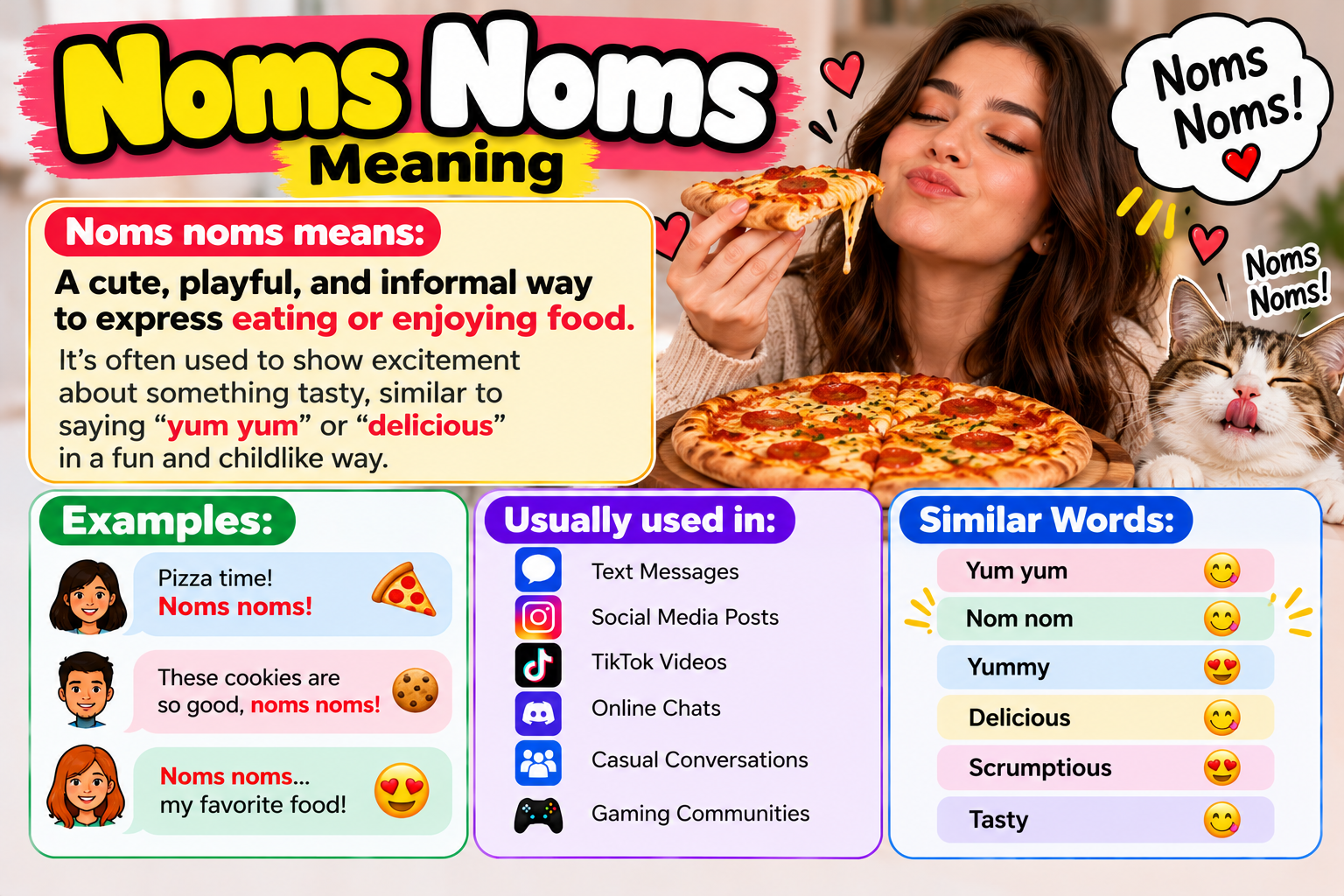
“Noms noms” is a playful internet slang phrase used to express enthusiasm for delicious food, derived from the rhythmic chewing sound “om nom nom.” In modern branding and culture, it symbolizes warmth, playfulness, comfort, and an irresistible, craving-worthy culinary experience.
Most brand strategy guides treat trendy slang like a passing joke. They hand you generic word lists without explaining the psychological hooks or market positioning behind them. But if you want to build a brand around food name ideas or slang-inspired concepts, understanding the cultural authority and phonetic weight of your title is non-negotiable.
What Does Noms Noms Mean? Slang Origins & Cultural Vibe
The phrase traces its popular roots back to pop culture and early internet meme lore—most notably popularized by Sesame Street’s Cookie Monster making “om nom nom” sounds while devouring treats. Over time, the phrase shortened into “noms” or “noms noms.”
Today, it operates as both a noun (e.g., “Time for some noms noms!”) and an exclamation of delight. It conveys:
- Sensory Delight: Instant association with taste, indulgence, and satisfaction.
- Approachable Warmth: A friendly, unpretentious tone that lowers consumer hesitation.
- Visual & Auditory Aesthetics: A soft, repeating phonetic rhythm that easily sticks in human memory.
Curated Name Categories: From Aesthetic Words to Catchy Food Name Ideas
When translating slang into market-ready concepts, you need distinct positioning. Here is how to structure slang-inspired food name ideas and aesthetic words across different brand personalities:
1. Playful & Catchy
- Nomsy Bite | Upbeat, modern, and lighthearted | Best for snack subscription boxes, casual food trucks, or candy lines.
- Daily Noms | Habit-forming and friendly | Best for meal-prep services or daily smoothie bars.
- NomNation | Community-driven and energetic | Best for food review apps or viral cooking channels.
2. Aesthetic & Minimalist
- Maison Noms | Chic yet whimsical fusion | Best for boutique bakeries or artisanal dessert parlors.
- Noma & Co. | Sleek, shortened, and modern | Best for minimalist café chains or aesthetic kitchenware.
- Atelier Nom | Craft-focused and refined | Best for gourmet chocolate makers or specialty coffee roasters.
3. Pet & Lifestyle Brands
- Happy Noms | Joyful, innocent, and wholesome | Best for organic pet treats or puppy bakeries.
- Little Noms | Gentle and cute | Best for toddler snack brands or baby food lines.
Linguistic & Naming Psychology Breakdown
Why does the sound structure behind “noms noms” work so effectively across human psychology? Here is what happens under the hood:
1. Reduplication and Memory Retention
The repetition of syllables (reduplication) is one of the earliest language patterns humans learn. Phrases with repeated sounds—like “noms noms”—are inherently easy for the brain to process, store, and recall.
2. The Phonetic Comfort of Onomatopoeia
The “N” and “M” nasal consonants create a warm, humming phonetic profile. Unlike sharp plosives (like K, T, or P), soft consonants evoke comfort, safety, and nourishment.
3. Emotional Resonance & Aesthetic Framing
Modern consumers gravitate toward aesthetic words that feel authentic and unpretentious. Incorporating expressive slang or play on words breaks down the formal barrier between business and buyer.
Comparison & Meaning Matrix
| Name Candidate | Vibe & Meaning | Ideal Industry / Brand Fit |
| Noms Noms | Pure comfort, playful chewing, nostalgic delight | Pet treat brands, casual snack lines, food blogs |
| Nomistry | The craft and science of delicious eating | Gourmet ghost kitchens, culinary tech platforms |
| Petit Noms | Delicate, cute, high-end bite-sized treats | French pastry shops, boutique catering |
| Urban Noms | Fast-paced, modern street food culture | Quick-service restaurants, food hall vendors |
Common Pitfalls When Selecting Slang-Based Names
Here’s where most founders get it wrong when building around trendy terms:
- Ignoring Brand Longevity: Leaning too heavily into hyper-specific internet memes can make a brand feel dated within a few years. Ensure your base name carries structural balance.
- Pronunciation Friction: If consumers are confused about how to spell or pronounce your variation, word-of-mouth marketing drops instantly.
- Trademark Bottlenecks: High-frequency slang terms often face crowded trademark classes. Always run preliminary trademark searches before committing to your domain and legal filing.
- Scaling Limitations: A name like “Puppy Noms Noms” locks you into pet care, making an expansion into human snacks difficult down the road.
Strategic Selection Framework
Before locking in any title inspired by culinary slang or aesthetic expressions, run it through this four-step test:
- The Audio Test: Say the name aloud ten times in a row. Does it roll off the tongue effortlessly, or do you stumble over syllables?
- The Search Engine & GEO Test: Search the phrase alongside your product category. Does your proposed brand name get buried under general meme search results, or can you easily dominate the entity space?
- The Domain & Social Handle Audit: Check for clean, uncluttered domain options (.com, .co, or category-specific TLDs) and matching social media handles.
- The Audience Perception Check: Present the title to five people in your target demographic without context. Ask them what industry they think it belongs to and what emotions it evokes.
Frequently Asked Questions
What is the origin of the term “noms noms”?
The term originated as onomatopoeia for eating sounds (“om nom nom”), popularized in modern digital culture by the Cookie Monster from Sesame Street and early internet cat memes. It evolved into general slang for delicious food or snacks.
Is “noms noms” appropriate for a formal food business?
While “noms noms” itself suits casual, youth-oriented, or pet-focused brands, elevated variations like Maison Noms or Nomistry allow gourmet and artisanal businesses to leverage the friendly root word while maintaining a premium positioning.
How do I come up with creative food name ideas using slang?
Combine sensory root words with evocative industry terms (e.g., combining “nom” with “atelier,” “craft,” or “daily”) to balance fun slang with clear commercial positioning.
