

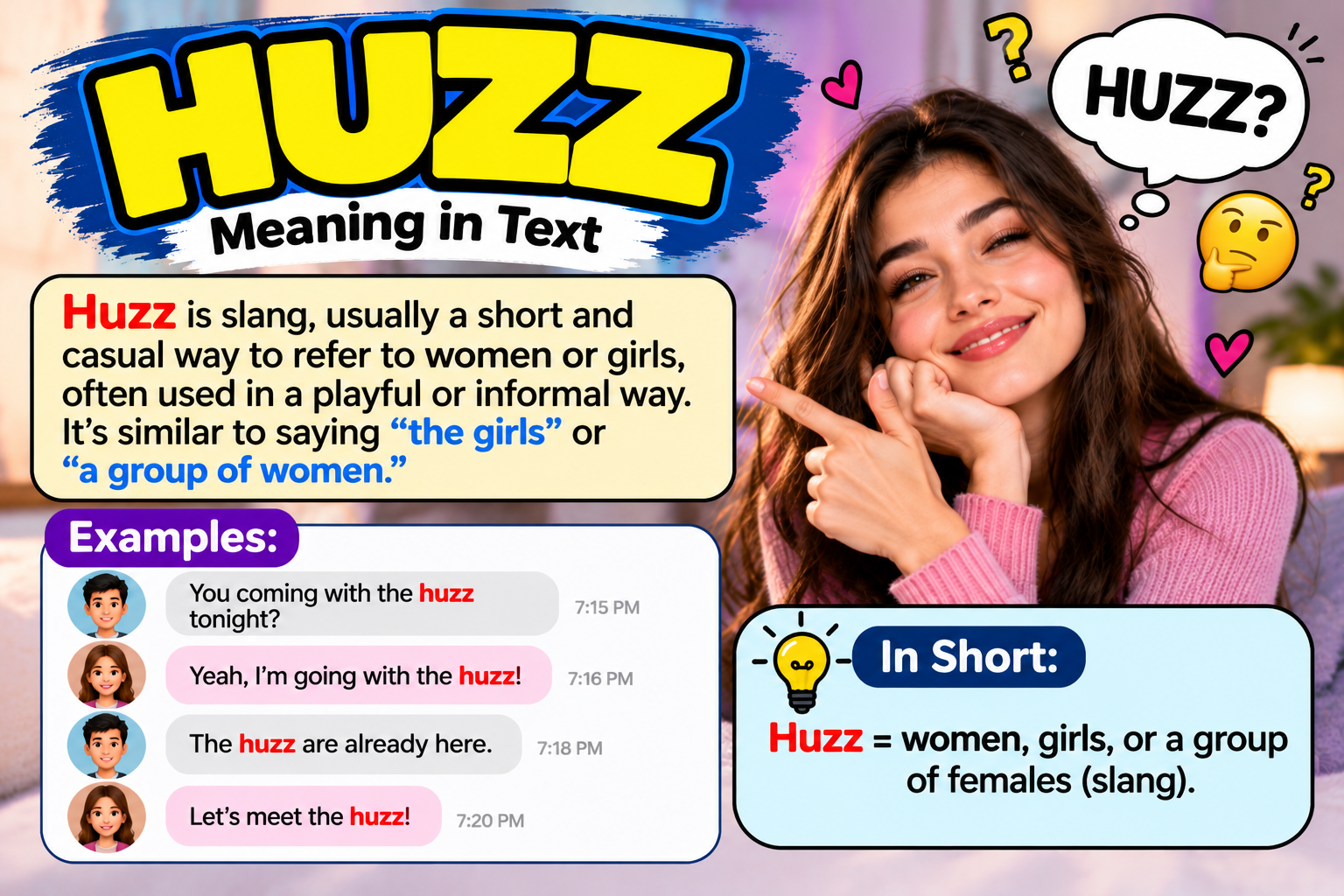
Quick Summary: “Huzz” is modern internet slang—popularized on TikTok and Instagram—used primarily as a shortened, stylized variation of the word “hoes,” usually referring to girls, women, or a group of people. In digital culture, it functions as casual banter, self-referential humor, or Gen Z slang, though its tone varies heavily depending on context.
If you have stumbled across “huzz” on your TikTok FYP or seen it dropped in Instagram comments, you are not alone. Internet slangs evolve overnight, making it tough for creators and brand strategists to keep up with shifting Gen Z terminology.
Without proper cultural context, using trending internet jargon can cause major reputational backfires. Here is everything you need to know about what “huzz” means, where it originated, and how to evaluate high-profile viral slang terms when naming modern digital brands or media channels.
The Origins and Evolution of “Huzz”
To understand modern slang, you have to look at phonetic exaggeration on social video platforms.
- Phonetic Origin: “Huzz” is an exaggerated, deliberate mispronunciation of “hoes.” It mirrors similar internet phonetic twists like “bruh” (from brother) or “cuz” (from cousin).
- Viral Amplification: The term gained massive traction through Twitch streamers, TikTok comedy skits, and meme creators who adopt dramatic accents or exaggerated pronunciations to bypass social media comment filters while adding comedic emphasis.
- Algorithmic Censorship Evasion: On platforms like TikTok and Instagram Reels, explicit or traditionally offensive words can trigger comment shadowbans or video demonetization. Altering the spelling to “huzz” acts as a work-around for algorithmic detection.
Gen Z Slang Meanings: How “Huzz” Is Used in Conversation
The word changes meaning drastically depending on who is saying it and the tone of the conversation.
1. Casual Banter or Group Reference
In most meme contexts, “huzz” is used casually to refer to a group of girls or people at a gathering or event.
Example: “Out here with the huzz tonight.”
2. Comedic Self-Deprecation
Creators frequently use the term in self-referential jokes regarding their dating life or social interactions.
Example: “Bro thinks he’s pulling all the huzz.”
3. Exaggerated Internet Persona
Streamers and influencers use the word as part of a playful, over-the-top internet dialect rather than serious everyday speech.
Categorized Related Terms and Internet Slang Context
Understanding internet culture requires knowing how related slang terms interact within the same vernacular ecosystem.
- Rizz | Charisma / Flirting ability | Best for casual dating commentary and social humor.
- Gyatt | Exclamation of surprise or attraction | Best for viral reaction videos and gaming streams.
- Baddie | A confident, attractive individual | Best for fashion, beauty, and lifestyle branding.
- Simp | Someone who does way too much for a crush | Best for relationship memes and banter.
- Main Character | Someone radiating central energy | Best for lifestyle, self-care, and personal branding.
Linguistic & Naming Psychology Breakdown
Here’s where most creators and founders get it wrong: slang moves fast, but brand permanence requires lasting resonance.
<!DOCTYPE html>
<html lang="en">
<head>
  <meta charset="UTF-8">
  <meta name="viewport" content="width=device-width, initial-scale=1.0">
  <title>HUZZ — Slang Term Analysis</title>

  <style>
    * {
      box-sizing: border-box;
      margin: 0;
      padding: 0;
    }

    body {
      font-family: Arial, Helvetica, sans-serif;
      background: #f4f7fb;
      color: #172033;
      padding: 40px 20px;
    }

    .flowchart {
      max-width: 1050px;
      margin: 0 auto;
      background: #fff;
      border: 2px solid #172033;
      border-radius: 18px;
      padding: 35px;
      box-shadow: 0 12px 35px rgba(0, 0, 0, 0.08);
    }

    .title {
      text-align: center;
      font-size: 30px;
      font-weight: 800;
      margin-bottom: 35px;
      color: #172033;
    }

    .root {
      display: flex;
      justify-content: center;
      margin-bottom: 35px;
    }

    .root-box {
      background: #172033;
      color: #fff;
      padding: 18px 30px;
      border-radius: 12px;
      font-size: 21px;
      font-weight: 800;
      box-shadow: 0 8px 20px rgba(23, 32, 51, 0.2);
    }

    .branches {
      display: grid;
      grid-template-columns: 1fr 1fr;
      gap: 55px;
      position: relative;
    }

    .branch {
      position: relative;
      padding-top: 25px;
    }

    .branch::before {
      content: "";
      position: absolute;
      top: 0;
      left: 50%;
      width: 3px;
      height: 25px;
      background: #b8c3d4;
      transform: translateX(-50%);
    }

    .branch-line {
      display: flex;
      align-items: center;
      gap: 12px;
      margin-bottom: 18px;
    }

    .arrow {
      font-size: 24px;
      font-weight: bold;
      color: #596579;
    }

    .box {
      flex: 1;
      padding: 20px;
      border-radius: 13px;
      font-size: 17px;
      font-weight: 700;
      line-height: 1.4;
      border: 2px solid;
      background: #fff;
      box-shadow: 0 6px 18px rgba(0,0,0,0.06);
    }

    .blue {
      color: #286ee8;
      border-color: #286ee8;
      background: #eef5ff;
    }

    .purple {
      color: #7650d8;
      border-color: #7650d8;
      background: #f4efff;
    }

    .green {
      color: #168c69;
      border-color: #168c69;
      background: #ebfaf5;
    }

    .orange {
      color: #d86e19;
      border-color: #d86e19;
      background: #fff4e9;
    }

    .connector {
      position: absolute;
      top: 0;
      left: 50%;
      width: 50%;
      height: 3px;
      background: #b8c3d4;
      transform: translateX(-50%);
    }

    .footer {
      margin-top: 35px;
      text-align: center;
      padding: 16px;
      border-radius: 10px;
      background: #f0f3f8;
      color: #596579;
      font-size: 14px;
      line-height: 1.5;
    }

    @media (max-width: 750px) {
      body {
        padding: 20px 10px;
      }

      .flowchart {
        padding: 22px 15px;
      }

      .title {
        font-size: 23px;
      }

      .root-box {
        font-size: 18px;
        padding: 15px 20px;
      }

      .branches {
        grid-template-columns: 1fr;
        gap: 25px;
      }

      .branch {
        padding-top: 0;
      }

      .branch::before,
      .connector {
        display: none;
      }

      .branch-line {
        margin-bottom: 12px;
      }

      .box {
        font-size: 15px;
        padding: 17px;
      }
    }
  </style>
</head>

<body>

  <div class="flowchart">

    <h1 class="title">HUZZ — SLANG TERM ANALYSIS</h1>

    <!-- Main Term -->
    <div class="root">
      <div class="root-box">
        Slang Term: HUZZ
      </div>
    </div>

    <div class="branches">

      <!-- Left Branch -->
      <div class="branch">

        <div class="branch-line">
          <span class="arrow">↳</span>
          <div class="box blue">
            Phonetic Softening (Z-Ending)
          </div>
        </div>

        <div class="branch-line">
          <span class="arrow">↳</span>
          <div class="box green">
            High Viral Engagement (Short-Term)
          </div>
        </div>

      </div>

      <!-- Right Branch -->
      <div class="branch">

        <div class="branch-line">
          <span class="arrow">↳</span>
          <div class="box purple">
            High Context Sensitivity
          </div>
        </div>

        <div class="branch-line">
          <span class="arrow">↳</span>
          <div class="box orange">
            Trademark / Reputational Risk (Long-Term)
          </div>
        </div>

      </div>

    </div>

    <div class="footer">
      Naming analysis can balance phonetic appeal, viral potential,
      contextual meaning, and long-term brand risk.
    </div>

  </div>

</body>
</html>
Phonetic Structure
The word relies on a hard “H” sound coupled with a buzzing “ZZ” sound. In linguistics, words ending in a soft “z” sound feel less abrasive and more informal than those ending in a hard “s.” This softened phonetic structure makes the term feel intentionally silly or exaggerated rather than overtly sharp.
Emotional Triggers & Risks
- In-Group Belonging: Using hyper-current slang signals that a creator or channel is plugged into youth culture.
- Context Sensitivity: Because the root word carries derogatory origins, using “huzz” in corporate, professional, or main-stream consumer contexts carries significant brand safety risk.
Comparison & Meaning Matrix
| Term / Slang | Primary Meaning & Vibe | Brand Safety Rating | Ideal Context / Platform Fit |
| Huzz | Slang variant for women/girls; casual internet humor. | ⚠️ Low | Short-form meme content, gaming streams. |
| Rizz | Charisma, charm, romantic persuasion. | 🟢 High | Youth media, dating apps, casual apparel. |
| Baddie | High-aesthetic, confident persona. | 🟡 Medium | Beauty products, streetwear, lifestyle channels. |
| Main Character | Confident, self-focused, cinematic vibe. | 🟢 High | Wellness brands, podcasts, personal blogs. |
Common Pitfalls When Adopting Internet Slang in Branding
No jargon, just facts. Adopting ephemeral internet slang for permanent brand assets usually ends in one of three traps:
- 1. Rapid Expiration (The Cringe Curve): Internet terms peak quickly. What feels cutting-edge today can feel deeply out of touch six months later when the internet moves on.
- 2. Trademark Bottlenecks: Trendy slang words face intense trademark scrutiny. Registering a viral term as a commercial trademark is notoriously difficult due to prior public usage and genericness.
- 3. Audience Alienation: Older or non-chronically-online demographics will likely misinterpret or feel confused by hyper-niche internet vernacular.
Strategic Selection Framework: How to Evaluate Slang for Media & Names
If you are considering integrating viral terms into a project, brand identity, or content strategy, run them through this 4-step checklist:
- Test for Longevity: Will this word still make sense in 3 years, or is it tied to a temporary viral video trend?
- Audit the Origin: Research the root word. Does the original term carry baggage that could harm your brand’s reputation down the line?
- Verify Audience Alignment: Is your primary target audience Gen Z internet natives who intuitively understand the joke?
- Check Domain & Handle Viability: Are clean digital handles (.com domains, social handles) available without paying inflated secondary market prices?
Frequently Asked Questions
What does huzz mean on TikTok?
On TikTok, “huzz” is slang for “hoes,” typically used in a playful, exaggerated, or ironic way to refer to girls or a group of people in comments and skits.
Is “huzz” an offensive word?
While often used lightheartedly in meme culture, its root word (“hoes”) can be offensive. Caution is advised when using it outside casual peer-to-peer internet settings.
Can you use slang terms like “huzz” for a business name?
It is generally not recommended for mainstream businesses due to rapid trend cycle expiry and potential brand safety concerns associated with its root definition.
